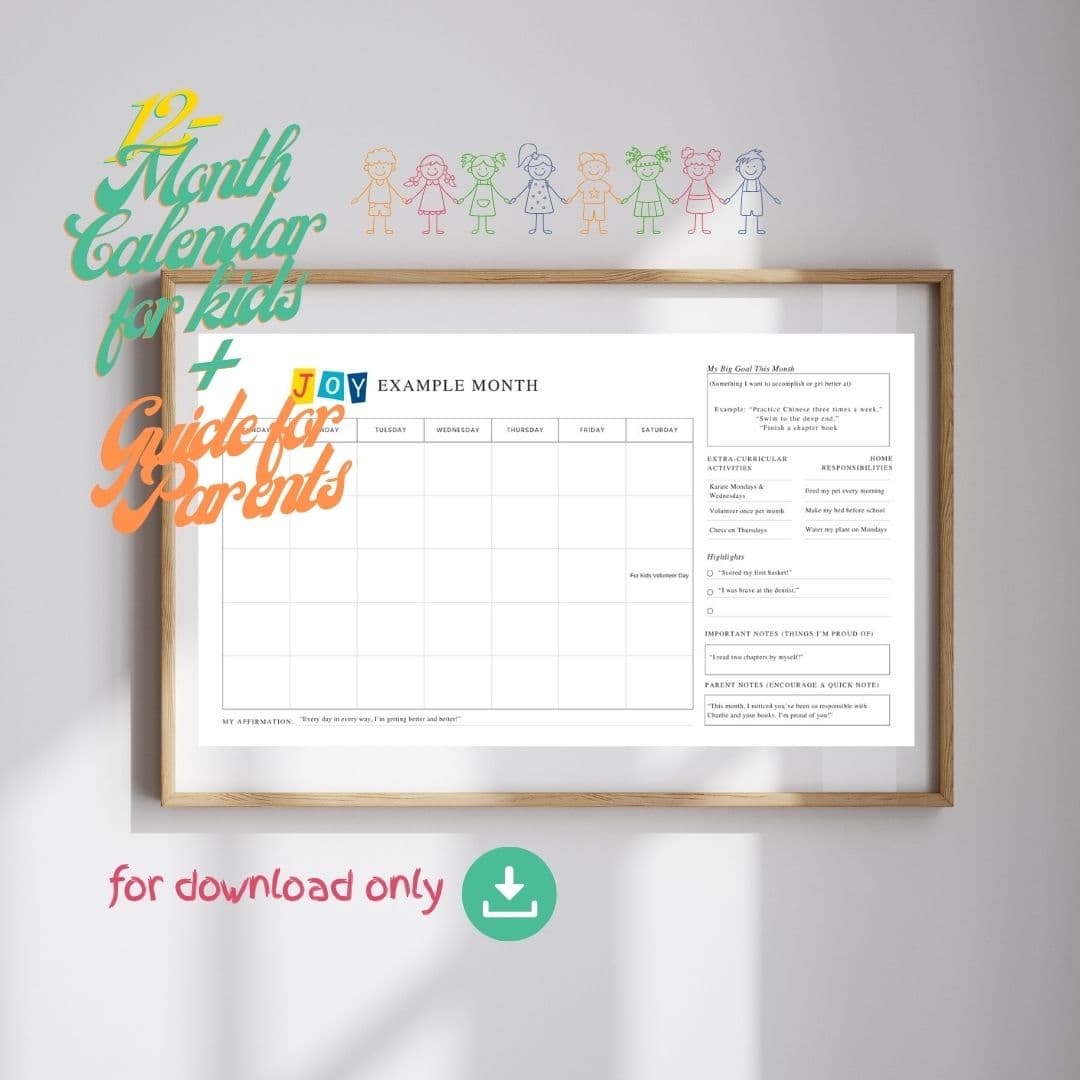

As summer winds down and a new school year begins, many of us start thinking about routines, organization, and how to help our kids succeed—emotionally, academically, and socially. That’s exactly why I created The Intentional Kid’s Calendar—a simple, powerful back-to-school calendar for kids ages 5–13 (but it honestly works for everyone!).
Whether you homeschool or your child attends public or private school, this tool is meant to help your family kick off the year with intention, not overwhelm.
Here’s why this calendar became one of the most meaningful tools in our home—and why I think it can help you too.
Why I Created This Back-to-School Calendar
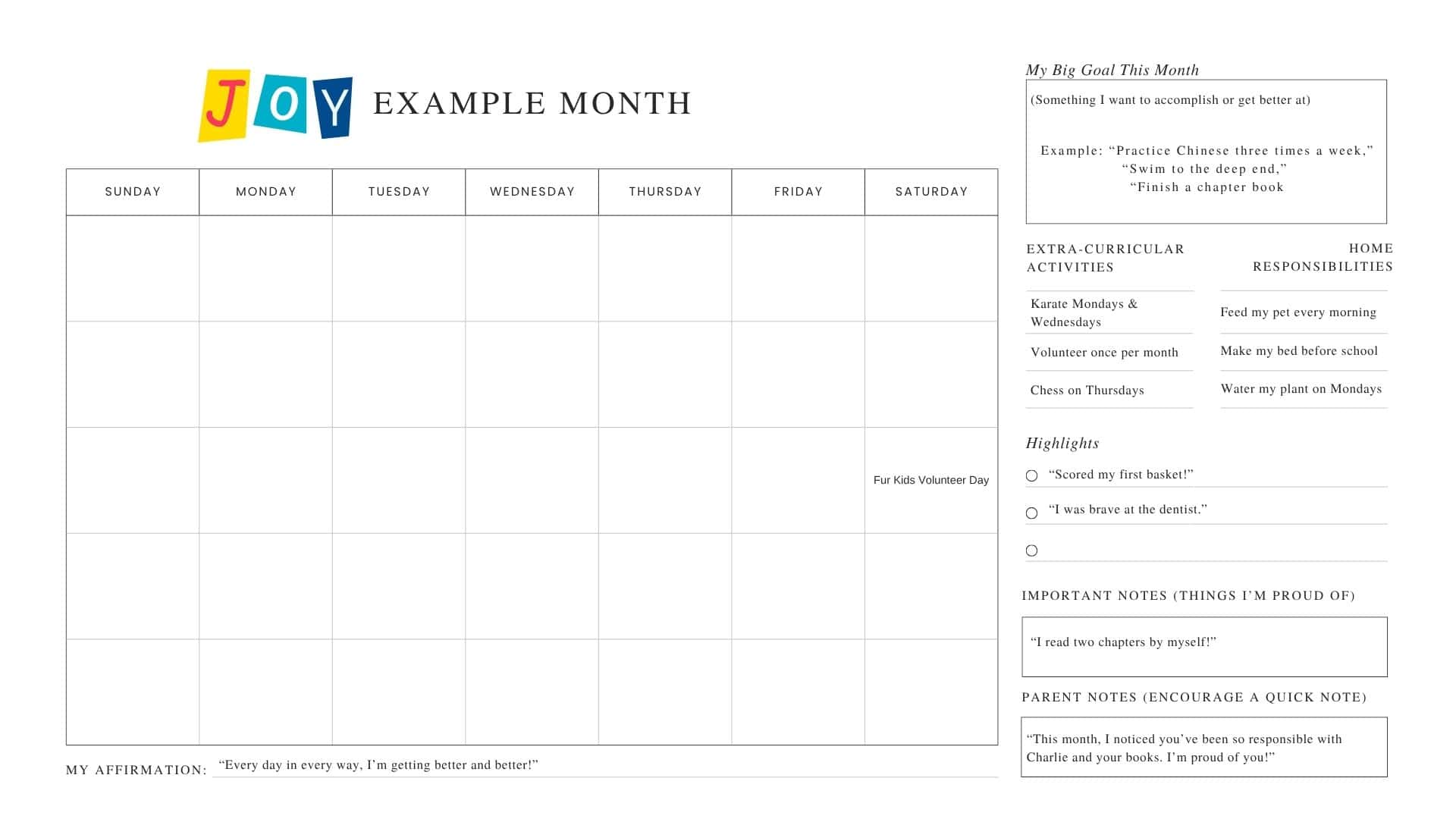
Back-to-school season always feels like a reset. The notebooks are fresh, the mornings start earlier, and the energy in the air says, “It’s time to grow.” As parents, we feel the excitement too—along with the overwhelm. We’re balancing new schedules, after-school activities, lunchboxes, emotions, transitions, and everything in between. That’s exactly why I created The Intentional Kid Calendar—a printable, goal-oriented, reflection-based monthly calendar designed to help kids ages 5 to 13 ease into the school year with confidence, structure, and self-awareness.
As a mom to a seven-year-old, I needed a tool that worked in real life. I wanted something more than a planner—something gentle, growth-focused, and empowering. A tool that would help Carter reflect on his goals, take pride in his habits, and build routines in a kind, encouraging way. And now I’m sharing that with you.
You can find a direct link to the calendar here.
You can also browse our full Etsy shop at the top right corner of our website or visit directly here.
What Makes This Calendar Different
Unlike most printable planners, this one isn’t about cramming more into your child’s schedule or focusing solely on achievements. It’s a mindset tool. A rhythm. A gentle invitation to grow.
Monthly Goal Tracker
Each month begins with space for your child to choose one exciting, age-appropriate goal. This could be:
- Read a chapter book
- Swim a full lap
- Say three sentences in Spanish
- Feed the dog every day
- Learn to make a snack
The goal should be fun and doable. You can scale it based on age and attention span. Whether your child is five or fifteen, the format still works. For younger kids, you’ll guide them. For older kids or teens, this becomes a valuable self-coaching exercise.
Weekly Routine Space
Use this section to track consistent activities like:
- Soccer on Mondays
- Piano on Thursdays
- Church youth group on Fridays
- Library visits on Saturdays
It helps children visualize their week and builds predictability—so important for emotional safety.
Home Responsibility Tracker
Each month includes space for one family responsibility. These can include:
- Making the bed
- Putting away laundry
- Helping pack lunches
- Watering plants
This helps reinforce the connection between contribution and confidence.
Positive Affirmation Section
Let your child pick a monthly affirmation. Examples:
- I am responsible and kind
- I learn a little more every day
- I can do hard things
You can repeat favorites or create new ones. These positive beliefs become inner voice patterns over time.
Gentle Reflection + Parent Notes
At the end of each month, your child is invited to reflect on their effort and growth.
Example reflections:
- I helped with lunch three times
- I remembered to feed the dog every day
- I tried a new word in Chinese
- I raised my hand more in class
There’s also a small space for you to leave a monthly note. These tiny affirmations from you mean so much. “I noticed how responsible you were this month” or “I’m so proud of the way you stuck to your reading goal” might seem simple, but they become emotional anchors for your child.
Who Is This Calendar For?
This is for any child—any age. It works beautifully with younger children who need your help writing, older kids who are learning to manage their routines, or even teens who want a framework for reflection. You can even use it yourself as an intentional living tool. Because let’s be honest—we’re never too young or too old to ask ourselves:
- What makes me happy?
- What are my goals this month?
- What kind of person am I becoming?
Whether your child is in public school, homeschool, private school, or transitioning between, this calendar is a powerful tool for developing resilience, reflection, and rhythm.
How We Use the Calendar at Home
We print the calendar each month and keep it somewhere visible—right by Carter’s desk. Every Sunday evening, we sit down and talk about the week:
- What are we working toward?
- What’s our one home responsibility?
- What’s going on this week—anything new?
- How did last week go?
It becomes a ritual, not a task. Some months, we’re more consistent than others, and that’s okay. The point isn’t perfection—it’s presence. The goal isn’t more pressure. It’s more connection.
We also hang on to our old calendars in a folder. It’s become a yearbook of growth. Carter loves looking back to see the goals he reached and the notes I left.
🎒 Want to help your child build routines and reflect on their progress this year?
👉 [Download The Intentional Kid Back-to-School Calendar on Etsy Now]
Simple Reward System That Works
One of our favorite parts of using this system is our simple reward system. We use a printable. Here’s one we love! Every time Carter completes a goal, keeps up with his responsibility, or shows effort, he earns a punch. After 10 punches, we celebrate with:
- Ice cream or smoothie dates
- Family movie night with popcorn
- A new sticker book or drawing set
- An extra 30 minutes of staying up
- Choosing what’s for dinner that night
This system isn’t about bribery. It’s about reinforcing effort and consistency. And the rewards don’t have to cost much. They just have to feel special.
Bonus Gift: The Intentional Parenting Guide
As a thank-you for downloading the calendar, you’ll also receive a copy of our Intentional Parenting Guide. It’s a quick-start companion filled with tips on how to use the calendar, how to guide your child through routines, and how to reflect with them each month. If you’re a busy parent who wants more peace and clarity in your home, this guide is for you. You’ll get the link as part of your download.
Why This Matters
According to the Center on the Developing Child at Harvard, routines, self-regulation, and executive function are key predictors of long-term success. These are the skills that help children focus, make decisions, manage their emotions, and follow through on goals.
This back-to-school calendar helps children:
- Visualize time and structure
- Track consistent habits
- Feel ownership over their growth
- Strengthen the bond between parent and child
- Celebrate character and effort—not just outcomes
And the best part? It’s gentle. It doesn’t overwhelm. It doesn’t expect perfection. It simply gives your child a soft place to land and a structure for becoming more self-aware.
💛 Ready to bring more intention and joy to your family’s back-to-school season?
🎉 [Grab your printable calendar toolkit now on Etsy] — designed with love by a fellow mom who just gets it.
Affiliate Disclosure
Some links in this post may be affiliate links. That means if you click and make a purchase, we may earn a small commission—at no extra cost to you. We only recommend what we genuinely use and love. Thanks for supporting our blog and helping us create resources that support intentional families.
Final Thoughts
The back-to-school season doesn’t have to feel rushed, stressful, or chaotic. With the right tools, it can be a season of reflection, connection, and growth. This calendar is more than a printable. It’s a mindset and my framework. It’s a parenting tool that says, “Let’s grow, together.”
Whether you’re using it for a kindergartener, a teen, or yourself, I hope it brings more calm, more connection, and more confidence into your home.
With love,
Iris